
Regular door closer maintenance prevents emergency repairs and safety code violations. Facility managers must inspect door hardware to ensure compliance. Following a structured door closer checklist extends hardware lifespan significantly. Additionally, proper upkeep reduces facility noise and limits legal risks.
The goal of preventive maintenance is not to fix things after they break. Instead, it lets you detect issues early on. For instance, early discovery of oil leaks and loose parts prevents larger system failures. Identifying abnormal closing behavior reduces downtime and facility safety risks.
Neglected hardware compromises both building security and fire safety compliance. Through proper door closer maintenance, you can avoid emergency service calls and replacement costs.
Proactive routine checks also help protect your hardware from premature wear and misuse. Consistent maintenance ensures that access points remain safe and functional. Facility managers save money by replacing worn parts before complete failure.
Facility managers need a systematic inspection schedule for door hardware. A standardized door closer checklist ensures consistent and accurate facility evaluations. It prevents common issues like doors slamming or failing to latch. Consider the schedules in the following sections as your guide for preventive maintenance.
Monthly inspections prevent small alignment issues from becoming major repairs. When performing monthly checks, first, inspect the closer body for hydraulic oil leaks. A leaking closer loses pressure and requires immediate component replacement. Next, evaluate the door for abnormal closing speeds during regular operation.
Test the opening force and ensure the door does not slam. Identify any door misalignment where the latch rubs the strike plate. Finally, tighten any loose screws on the unit. Record all monthly observations to track the degradation of the hardware.
Focus on inspecting the wear and tear of the arm, brackets, mounting points, and door leaf/frame. High-traffic exterior doors require detailed quarterly hardware inspections and cleaning. Verify that all mounting brackets remain tight against the installation surface. Check the mounting points for stress cracks or stripped screw threads.
You should also check the door leaf and frame for structural damage or warping. Apply non-oil-based Teflon lubricant to moving components to reduce friction. Knowing how to adjust commercial door closer settings extends hardware life. Remove dirt and dust from the closer body using mild soap.
Quarterly maintenance must include these actions:
Annual maintenance requires a comprehensive functional verification of the door. Confirm that the closer remains compatible with the fire door system. The closing device must overcome latch resistance from any angle. Verify the hardware compatibility with emergency exit door panic bars.
Consider having your annual compliance testing involving these steps:
This annual check also ensures compliance with local egress requirements. Document all service dates and test results in a maintenance log. Replace units that show severe mechanical fatigue or hydraulic fluid depletion. Testing ensures doors open freely without catching the floor or seals.
Facility managers often encounter symptoms requiring immediate door closer adjustment. Poor adjustment causes loud slamming in hospital or office environments. Noise interrupts patient rest and accelerates wear on the door frame. Understanding the root cause simplifies the troubleshooting and mechanical repair process.
| Abnormal Symptoms | Possible Causes | Recommended Actions |
| Door slams loudly | Closing valve is too loose | Turn closing valve clockwise |
| Door closes too slowly | Closing valve is too tight | Turn closing valve counterclockwise |
| Hydraulic oil dripping | Broken internal fluid seal | Replace the entire door closer |
| Door fails to latch | Misaligned strike plate | Realign strike plate and tighten screws |
| Hinge binds or squeaks | Lack of proper lubrication | Apply non-oil-based silicone lubricant |
Use a flathead screwdriver on the designated valves for speed adjustments. Proper adjustment ensures the door closes smoothly and securely. Avoid setting more closing force than required for the opening. Excessive force can make the door difficult to open and impacts accessibility.
Effective maintenance requires strict recordkeeping and detailed service logs. Documenting service dates helps track the lifecycle of each hardware unit. Facility teams must establish clear replacement cycles for aging hardware components. Emphasize the prioritization of critical doors, like fire and emergency exits.
Do not simply rely on discussing regular inspections in general terms. Use a defined schedule to manage hardware replacements efficiently and safely. The 2017 Grenfell Tower fire highlighted the risks of neglected maintenance. The Hackitt report noted that failed closers compromise fire compartmentalization.
Therefore, maintaining compliance with safety standards requires documented, proactive hardware management. Facility managers must treat door closers as critical life safety devices.

The core of maintenance is to extend service life, reduce failure rates, and maintain compliance. Consistent inspections ensure your commercial facility meets all structural fire codes. For dependable hardware, facility managers should partner with established manufacturers. OUDE brings 20 years of expertise to commercial door hardware manufacturing.
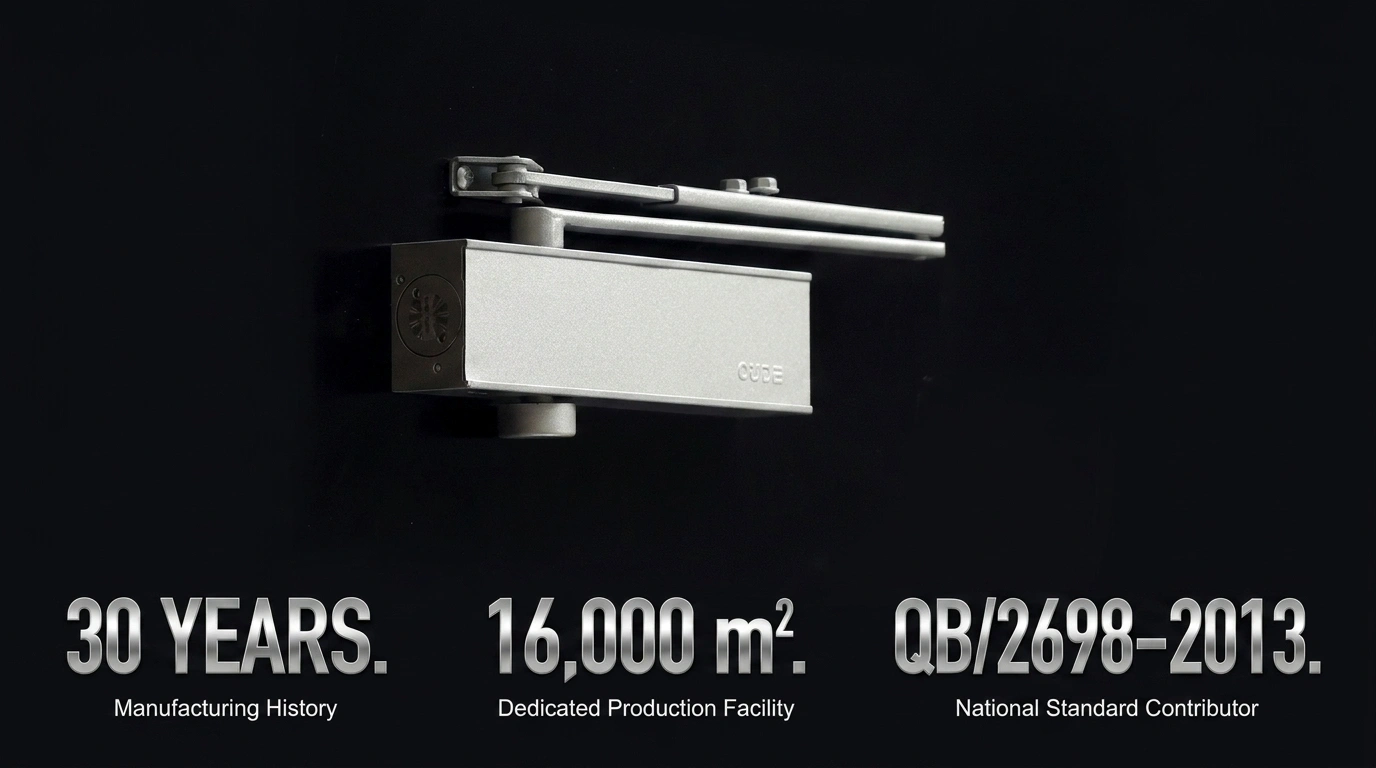
OUDE’s 16,000-square-meter factory holds ISO 9001, CE, and EN 1154 certifications. Furthermore, OUDE contributed to the National Light Industry Standard QB/2698-2013. Its products undergo standardized quality inspections to guarantee mechanical performance.
Choose OUDE for professional door closer maintenance and verified hardware replacements. Contact the OUDE team today to optimize your facility’s door closer systems.



 English
  Spanish
  French
  Arabic
  German
  Portuguese