
Hospital noise does not just come from machines or foot traffic. In many cases, it comes from something far more routine. Doors that close too fast, too loud and too often. Over time, that sound blends into the background for staff. For patients, it does the opposite. It interrupts rest, breaks sleep and adds stress in moments that should feel calm.
This case study shows how upgrading hospital door hardware with concealed door closers reduced noise disturbances by 40% and created a quieter environment for patient recovery. It outlines the problem, the retrofit approach and the measurable results.
Silence in a hospital supports recovery. Patients need uninterrupted rest. Staff need focus. Even small bursts of noise can disrupt both.
Many facilities exceed recommended sound levels during normal operations. Equipment moves, conversations carry and doors open and close all day. Among these, door movement stands out because of how often it happens.
A single loud close may seem minor. Multiply that across dozens of doors in high-traffic wards. The effect becomes a constant interruption. These short bursts matter more than steady background noise because they break concentration and sleep.
Quiet hospital ward solutions often focus on large systems. Door hardware rarely gets the same attention, even though it contributes to repeated noise throughout the day. In practice, reducing small, frequent disruptions often delivers more noticeable results than addressing only large noise sources.
The facility identified a pattern. Certain doors created repeated noise issues, especially in high-use areas.
Maintenance teams tracked complaints and found the same locations each time. Emergency corridors, patient wards, intensive care access points and staff service doors.
The issue was consistent. Doors closed too quickly or failed to latch smoothly. Instead of controlled movement, they produced sudden impact sounds.
At night, the effect increased. A single door closing in a quiet corridor carried across multiple rooms. Patients woke up. Staff had to respond. The cycle continued.
The problem came from inconsistent performance. Worn components and poor adjustment caused doors to behave unpredictably. Some drifted. Others slammed.
Most of these doors used surface-mounted closers. They worked, but not reliably under heavy use.
Their exposed design made them vulnerable to wear. Over time, that wear reduced control over closing speed and latching. Small changes in performance led to noticeable noise.
Adjustment precision also became a problem. Settings did not hold, especially in busy areas. Maintenance teams adjusted them often, but the results did not last.
Exposed components also collected dust and contaminants. This added pressure to healthcare facility maintenance routines.
The issue was not a single failure. It was a system that could not maintain consistent performance across high-demand environments.
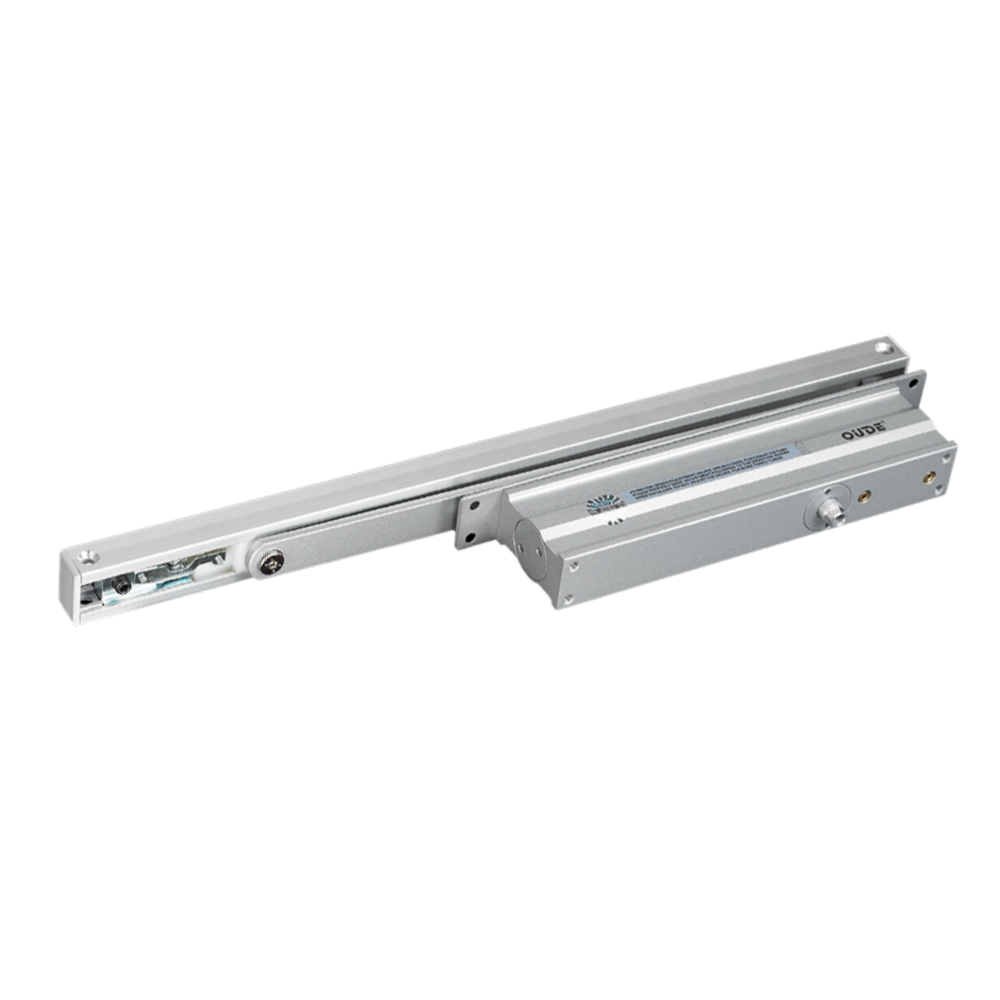
The facility implemented a door closer retrofitting guide focused on improving control and consistency. They replaced existing hardware with a concealed door closer for hospital use.
Concealed door closers sit inside the door or frame. This removes exposed mechanical parts and improves durability.
| Factor | Concealed Door Closer | Surface-Mounted Closer |
| Hygiene control | Minimal exposed surfaces | Multiple exposed components |
| Aesthetic integration | Clean finish | Visible arm |
| Damage resistance | Protected inside structure | Prone to impact |
| Maintenance frequency | Lower | Higher |
Fewer exposed parts make cleaning easier and reduce contamination risks. This aligns with healthcare facility maintenance standards.
Internal placement also protects the mechanism from damage in busy corridors. This helps maintain consistent performance over time, even under constant use.
Performance control made the biggest difference. OUDE concealed closers allowed precise adjustment of closing speed, latching speed, and backcheck control.
Each door was tuned based on its location and usage. High-traffic doors slowed down to prevent impact. Patient room doors closed gently without delay.
Instead of sudden noise, doors moved in a steady and controlled way. Even during peak activity, performance remained consistent.
This reduced the need for constant readjustment and supported quieter transitions between spaces.
The facility measured results using sound data and operational reports.
| Metric | Before Retrofit | After Retrofit | Improvement |
| Average door closing noise (dB) | 65 dB | 39 dB | ↓ 40% |
| Noise-related complaints (monthly) | 28 | 16 | ↓ 43% |
| Maintenance interventions (quarterly) | 18 | 10 | ↓ 44% |
The data confirmed a clear improvement. Door-related noise dropped significantly. Complaints decreased. Maintenance demands became more manageable.

Patients experienced fewer interruptions, especially during rest periods. Staff worked in a more controlled environment with fewer repeated disruptions from door movement.
Upgrading hospital door hardware can directly improve daily conditions inside a facility. In this case, retrofitting with concealed door closers reduced noise and improved consistency across high-use areas.
The change focused on controlling a repeated action. Each door closed the same way, every time. That consistency reduced disruption and supported a quieter environment.
For facilities reviewing quiet hospital ward solutions, targeted retrofitting offers a practical step. When small sources of noise get addressed, the overall environment becomes easier to manage. Investing in better hospital door hardware does not just solve maintenance issues. It supports a calmer space where patients can rest and recover with fewer interruptions during critical recovery periods and long-term patient care outcomes overall.





 English
  Spanish
  French
  Arabic
  German
  Portuguese