
Fire door inspection checklist focuses on one outcome: your door must close, latch, and seal correctly every time. This checklist walks through what inspectors actually look for under National Fire Protection Association 80 and what you can check now to avoid common failure points.
Fire doors exist for one reason. They help slow fire and smoke so people have time to move and respond. If a door does not close or latch, it does not do that job.
That is where problems start. A door can look fine during daily use, but still fail when someone checks it closely. Inspectors do not care if it “usually works.” They check if it works every time.
This also affects day-to-day operations. Failed inspections can delay approvals, trigger follow-up work, and interrupt operations. For facilities with strict timelines, that can turn into a bigger issue than expected.
So this is not about surface-level checks. It comes down to performance. And in most cases, the commercial door closer fire rated system is what decides whether the door passes or fails.
Inspectors follow specific checkpoints under NFPA 80. They are not guessing. They are verifying whether each door meets defined conditions tied to NFPA 80 compliance.
Gap measurements matter more than most people expect. Even small differences can affect how well the door controls smoke and heat.
| Inspection Area | What to Verify | Why It Matters |
| Top and side clearances | Check that gaps stay within allowed limits | Helps control smoke movement |
| Bottom clearance | Confirm it does not exceed the allowed range | Reduces airflow during fire |
| Frame condition | Look for warping or visible damage | Keeps the seal consistent |
| Alignment | Make sure the door sits correctly in the frame | Supports full closure |
Inspectors also look beyond measurements. They check for damage, drilled holes, or anything that changes how the door fits. A door that does not sit properly will not seal properly, even if everything else looks fine.

Labels matter more than people think. If the fire label cannot be clearly read or verified, that door will likely get flagged during inspection.
Then comes the actual test. They open the door and let it close.
That is it. No tricks. The door must:
This ties directly to fire door self-closing requirements. If the door stops short, drifts, or needs a push, it will likely get flagged.
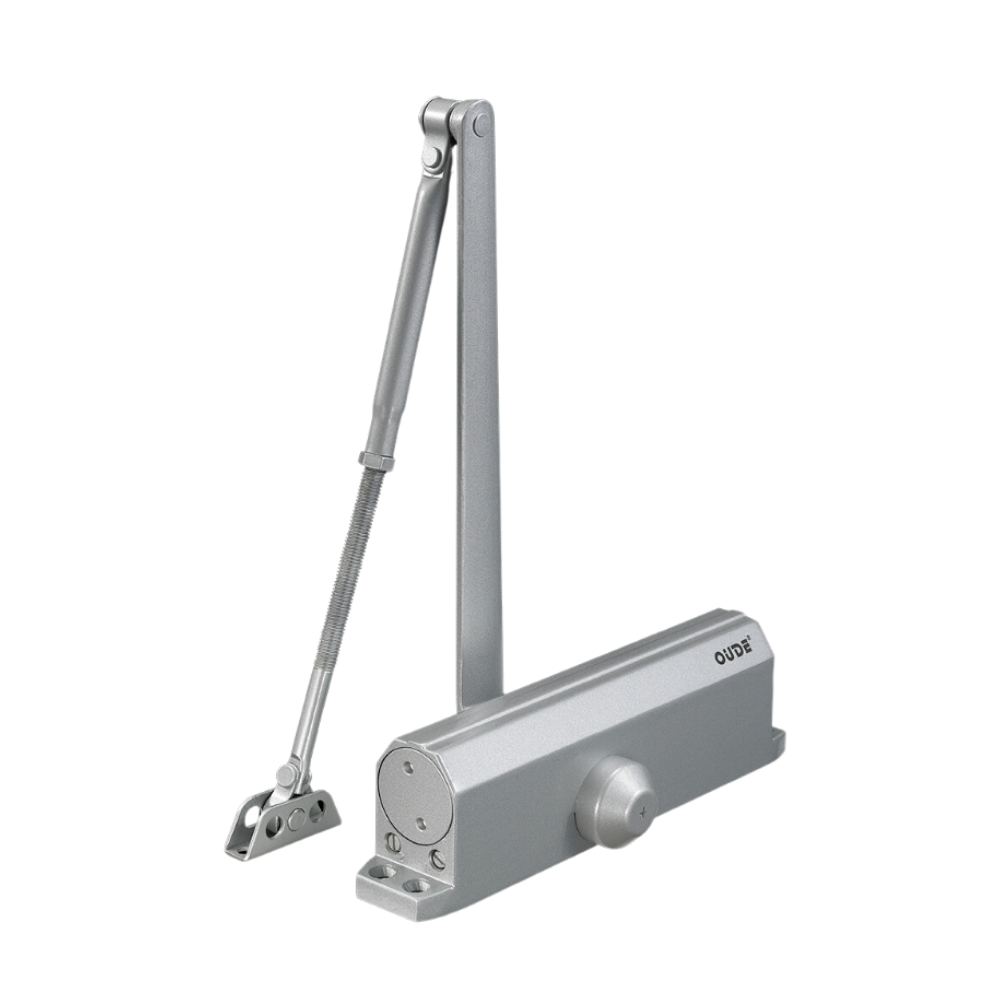
If you want to prepare properly, start with the closer. It controls almost everything the inspector cares about.
Open the door all the way. Let go. Watch it closely.
You are looking for three things:
Do this more than once. Try different starting positions.
Here is the key point: one good close does not mean the door will pass. It should close and latch the same way on every attempt. If it does not, that inconsistency is what inspectors usually catch.
Closers rely on internal pressure. When something starts to wear out, it usually shows. Look for:
These are not minor details. They are early signs that the closer may not perform consistently.
Sometimes you can adjust the closer and get it working again. Sometimes you cannot. If the issue keeps coming back, replacement is often the cleaner fix.
Most failures are not random. They repeat across buildings and inspections.
| Failure Point | What the Inspector May See | Practical Fix |
| Excessive clearance | Gaps look too wide or uneven | Recheck alignment and adjust setup |
| Misalignment | The door does not sit correctly | Realign the frame or hardware |
| Hardware wear | Loose or worn closer parts | Repair or replace components |
| Failed latching | The door closes but does not catch | Adjust or replace the closer or latch |
| Improper sizing | The door feels heavy or inconsistent | Install a properly rated closer |
Improper sizing shows up more often than expected. A closer that is too weak for the door will struggle no matter how much you adjust it.
If you keep adjusting and the problem stays, that usually means the closer is not matched to the door. That is the point where replacement starts to make more sense.
When you step back, most inspection issues come down to one thing. The door does not perform the same way every time.
If you are seeing hesitation, missed latches, or repeated adjustments, those are signs worth paying attention to. They often point to limits in the current setup, not just temporary issues.
At that stage, it may help to look at whether your hardware aligns with UL 10C door closer testing standards and fire-rated expectations. Systems designed for that level of performance tend to behave more consistently under inspection.
Before inspection day, keep it simple. Open the door. Let it close. Watch what happens. Repeat it a few times.
That quick check often tells you more than anything else.



 English
  Spanish
  French
  Arabic
  German
  Portuguese