
As buildings become smarter and more connected, many contractors, distributors, and property managers are now comparing smart door closers vs traditional door closers options for new projects. Traditional hydraulic closers remain dependable for everyday commercial use, while IoT-enabled smart closers are transforming automation, monitoring, and energy efficiency in modern facilities.
This guide breaks down the key differences, performance factors, and buying considerations so you can choose the best solution for your building environment.
A smart door closer uses integrated sensors, IoT connectivity, and advanced control features to automate door movement. These closers are commonly used in smart buildings, commercial complexes, hospitals, and high-traffic facilities where monitoring and safety are critical.
Most smart door closers include:
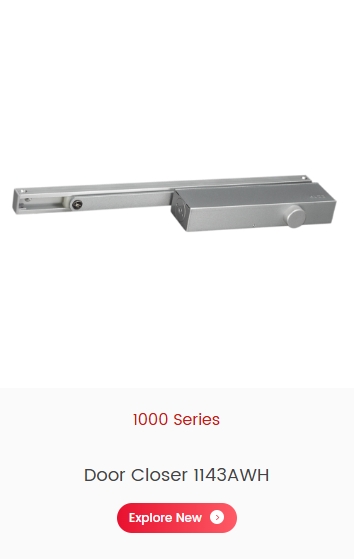
A traditional hydraulic door closer uses mechanical springs and oil-based compression to control the door’s movement. It remains the most widely used door-closing solution due to its durability, simplicity, and cost-effectiveness.
Traditional door closers are ideal for:
Choosing between a smart door closer vs traditional door closer depends on your building type, traffic volume, and automation needs. Below is a clear comparison of how each performs in real-world applications.
Smart door closers offer advanced IoT functions:
Traditional door closers operate mechanically and do not offer connectivity.
Smart door closers often include:
Traditional hydraulic closers provide:
Smart closers
Traditional hydraulic closers
Smart closers have higher upfront costs but can reduce long-term expenses through:
Traditional closers remain the most economical option for standard facilities.
According to recent market data from the Smart Door Closer Market Report, global demand for IoT-enabled closers continues to rise due to the increasing adoption of smart building systems.
Key growth drivers include:
In 2025 and beyond, smart building door closer trends show continuous growth in airports, hospitals, hotels, logistics centers, and corporate buildings.
Smart closers are ideal for facilities that require:
Although smart closers are rising in popularity, traditional models remain essential in many applications.
| Feature | Smart Door Closer | Traditional Door Closer |
| Connectivity | IoT, mobile app, sensors | Mechanical only |
| Safety Features | Anti-slamming, obstacle detection | Basic hydraulic controls |
| Installation | Skilled technician required | Simple installation |
| Maintenance | Software + hardware | Mostly hardware only |
| Cost | Higher | Lower |
Choosing between a smart door closer vs traditional door closer depends on your building’s automation level, safety requirements, and long-term performance goals. Smart closers offer advanced monitoring, hands-free operation, and IoT connectivity ideal for modern smart buildings. Meanwhile, traditional hydraulic closers remain the reliable, cost-efficient solution for everyday commercial use.
Whether you manage a smart building project or a standard commercial upgrade, understanding both technologies ensures the right investment for long-term safety, convenience, and operational efficiency.
Looking for reliable, high-performance hydraulic door closers for commercial or industrial projects? OUDE specializes in durable, fire-rated, and heavy-duty traditional door closers engineered for long-term stability and smooth door control. Explore OUDE’s full range of hydraulic door closers and request a quote today.
Q1: What is the main difference between a smart and traditional door closer?
A1: Smart closers include IoT connectivity, sensors, and automation, while traditional closers rely on mechanical hydraulic movement.
Q2: Are smart door closers more energy-efficient?
A2: Yes. Smart closers help reduce HVAC loss and energy waste by ensuring doors close properly and automatically.
Q3: Can smart door closers integrate with access control systems?
A3: Many smart closers are compatible with RFID access, fingerprint systems, smart locks, and building management systems.
Q4: Are smart door closers suitable for fire-rated doors?
A4: Some models are fire-rated, but always check the certification before installation. Traditional hydraulic closers are more commonly used for fire doors.
Q5: Which option is better for industrial applications?
A5: Traditional hydraulic closers are typically preferred due to their durability and low maintenance, though smart closers are slowly gaining adoption in automated facilities.









 English
  Spanish
  French
  Arabic
  German
  Portuguese