
In commercial construction and facility management, the initial price of a commercial door closer is often a misleading indicator of actual expenditure. Procurement decisions based solely on the lowest door closer cost per unit usually overlook the high frequency of mechanical failures and the resulting labor costs of replacement. To evaluate the actual value of door hardware, engineers must shift from a “price-per-unit” mindset to a focus on hardware lifespan or Lifecycle Cost Analysis (LCCA).
The most objective measure of a door closer’s value is its ANSI/BHMA A156.4 certification. Unlike consumer-grade hardware, industrial closers undergo rigorous stress testing. A Grade 1 closer must complete 2,000,000 cycles without leaking or losing control of the door’s sweep speed.
When a facility opts for a Grade 3 or unrated closer to reduce initial costs, it installs a component designed for 75% lower usage. In high-traffic environments, such as a hospital corridor, a Grade 3 unit may reach its fatigue limit within months. The technical result is a loss of spring tension and hydraulic damping, necessitating a complete replacement that exceeds the original “savings” within the first year of operation.
The internal engineering of a door closer dictates its maintenance requirements. High-value closers use alloy aluminum die-cast or cast-iron bodies because these materials resist the internal pressure generated by heavy doors. Budget models often utilize lower-grade materials that are prone to “oiling out.”
This term refers to hydraulic fluid bypassing the adjustment valves, leading to a loss of backcheck intensity and latching force. While economy units fail under these pressures, professional-grade options are engineered to handle loads up to 120 kg. The quality guarantees seal integrity, preventing fluid leakage.
Typical hydraulic fluids from petroleum change viscosity with temperature. Facility managers will need to adjust valves during seasonal transitions manually. In contrast, precision hardware uses an all-weather, stable fluid. This ensures consistent closing and latching speeds from -40°C to 80°C.
Reducing such maintenance services lowers hidden labor costs. Also, consistent closing cycles are essential to meet Americans with Disabilities Act (ADA) standards, which mandate a specific opening force (typically 5 lb). A cheap, closed-loop system that requires monthly valve tuning poses a high liability risk and increases operational expenditure.
For large-scale projects, sourcing directly from a bulk order door closer factory enables technical customization that off-the-shelf budget models lack. By procuring at scale, facilities can secure a lower door closer cost per unit for Grade 1 hardware, effectively bridging the gap between budget constraints and engineering requirements.
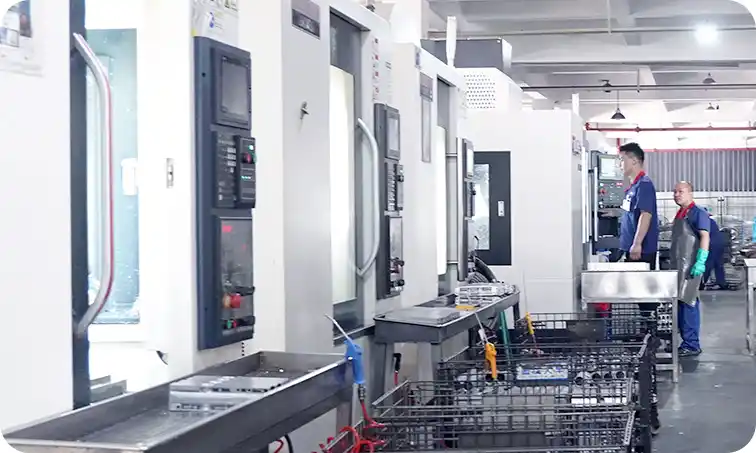
High-performance Door Closers Manufactured with Tight Tolerances and Full inspection—Ready for Large-scale Supply.
Choosing a door closer based solely on the lowest commercial door closer price creates a cycle of high-frequency maintenance. For engineers, the objective must be to minimize the Total Cost of Ownership by specifying hardware that exceeds the mechanical demands of the environment. High-cycle, Grade 1-certified hardware helps ensure your facility remains compliant with ADA and fire safety standards while reducing long-term labor overhead.









 English
  Spanish
  French
  Arabic
  German
  Portuguese