
The choice between EN 1154 vs ANSI A156.4 is important. It is not just about compliance. It is about whether your door closer actually fits your door, functions as it should, and prevents problems like slamming, misalignment, and premature wear. Read this article to understand the two standards and which one to choose without any doubts.
Certifications do one thing well. They remove guesswork.
When you source door closers across regions, you are not just choosing a product. You are choosing a system that must align with local installation standards, building codes and performance expectations.
That is where problems usually start.
A closer built for European sizing may not align with U.S. door prep. A unit selected for durability may not match the door size it is installed on. Those gaps do not show up on paper. They show up after installation.
Certifications help prevent that.
They define what the product was tested for, how it should be used and what conditions it can handle. That gives procurement teams a clearer starting point.
The difference becomes easier to see when you strip it down:
| Standard system | What it focuses on | What does that mean for you |
| EN 1154 | Aligning the closer’s force with the door’s dimensions | Better control when correctly selected |
| ANSI A156.4 | Proven durability through testing | Confidence under heavy use |
So what does this mean in practice?
If you choose the wrong standard, you are not just off-spec. You risk poor fit, uneven closing and more adjustments on site.
EN 1154 focuses on one core idea. Match the closer to the door.
The priority shifts from strength alone to selecting a closer that suits the door.
EN power sizes give you a structured way to choose.
Each size corresponds to a maximum door width. That makes selection more predictable and easier to control.
Here is a simplified door closer size chart:
| EN size | Recommended max door width (mm) | Typical use |
| EN 1 | 750 mm | Very light interior doors |
| EN 2 | 850 mm | Light interior doors |
| EN 3 | 950 mm | Standard office doors |
| EN 4 | 1100 mm | Heavier interior doors |
| EN 5 | 1250 mm | High-traffic commercial doors |
| EN 6 | 1400 mm | Large commercial doors |
| EN 7 | 1600 mm | Industrial or oversized doors |
This is where EN 1154 becomes practical.
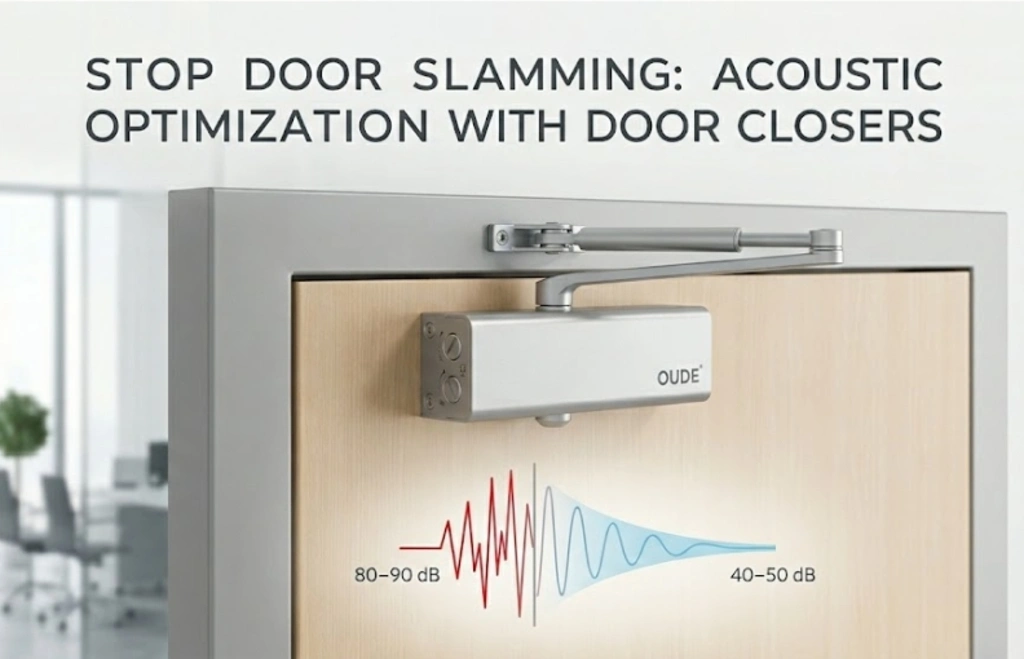
When the closer matches the door size, the motion feels controlled from start to finish. The door does not speed up at the end. It does not hit the frame harder than expected.
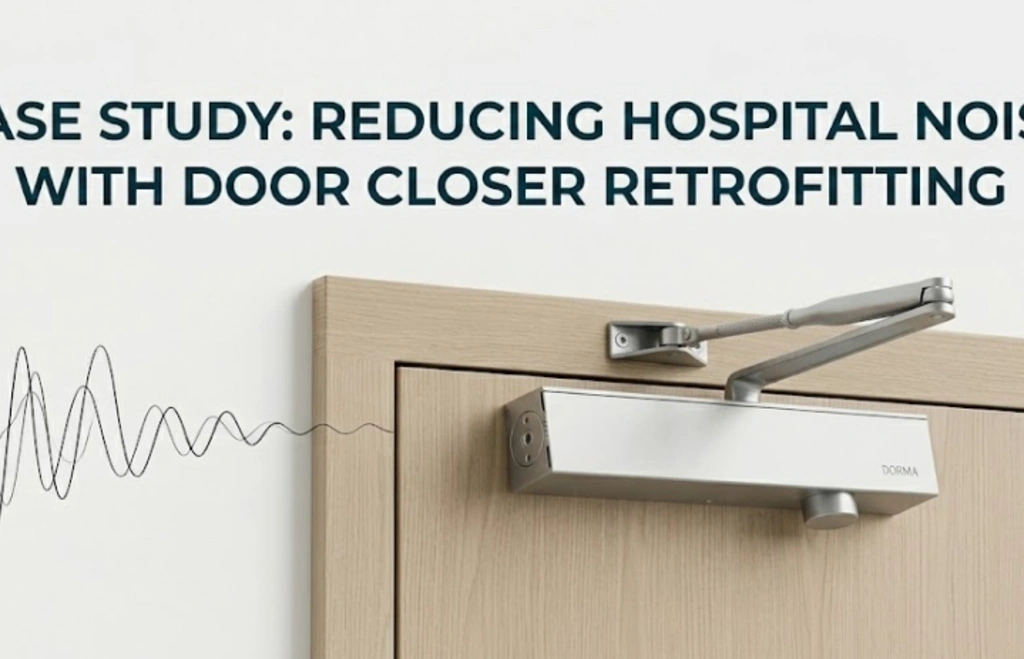
In other words, proper sizing reduces the chance of slamming without relying on constant adjustment.
A CE marked door closer shows that the product meets European regulatory requirements. It confirms that the closer aligns with safety and performance standards required for use in that market.
UKCA marking serves the same purpose in the United Kingdom.
For buyers, this matters for three reasons:
It does not guarantee performance in every situation. But it tells you the product meets the baseline needed to be used in that region.
ANSI A156.4 takes a different approach. It focuses on what happens over time.
Instead of sizing first, it asks: Can this closer keep working after repeated use?
ANSI uses performance grades to classify closers.
An ANSI Grade 1 door closer represents the highest level. It is commonly associated with up to 2 million cycles of testing. That makes it suitable for doors that open and close all day.
Grade 2 closers fall into a lower performance range. They still work well, but they are better suited for moderate traffic.
Here is a simple way to read it:
| ANSI grade | What does it tell you | Where it fits |
| Grade 1 | Built for heavy use | High-traffic commercial doors |
| Grade 2 | Built for regular use | Standard commercial spaces |
BHMA certified hardware confirms that the product has passed these structured tests.
So instead of guessing durability, you are working with a tested performance level.
ANSI also ties into ADA requirements.
For interior hinged doors, the opening force is generally limited to 5 lbf. That ensures users can open the door without excessive effort.
Exterior doors follow different rules and do not carry the same limit.
This creates a balance you cannot ignore:
If that balance is off, the door may feel light to open but still close too fast. That is where adjustment becomes critical.
At this point, the difference between EN 1154 vs ANSI A156.4 becomes clearer.
They are not competing systems. They answer different questions.
| Category | EN 1154 | ANSI A156.4 |
| Measurement system | Metric (mm) | Imperial (inches) |
| Classification method | Power sizes (EN 1–7) | Performance grades (Grade 1–3) |
| Primary focus | Fit and controlled motion | Durability over time |
| Certification marking | CE / UKCA | BHMA certification |
| Selection approach | Match to door size | Match to usage level |
So what does this mean for you?
If you prioritize fit and controlled movement, EN 1154 gives you a clearer path.
If you prioritize long-term durability, ANSI A156.4 provides stronger validation.
Most global projects need both perspectives, not just one.
EN 1154 vs ANSI A156.4 highlights two sides of the same problem. One focuses on matching the closer to the door. The other focuses on how the closer performs over time.
You do not have to choose one and ignore the other.
OUDE aligns its door closer solutions with both EN 1154 and ANSI/BHMA A156.4 requirements. That allows buyers to work across regions without compromising fit or durability.
In practical terms, this reduces friction during procurement. You spend less time adjusting on-site and more time working with hardware that behaves the way you expect.
When the closer matches both the door and the usage, performance becomes consistent. And when performance stays consistent, problems like slamming, uneven closing and premature wear become easier to avoid.









 English
  Spanish
  French
  Arabic
  German
  Portuguese