
Understanding Door closer market trends in Europe and Asia helps manufacturers, distributors, and project managers anticipate demand, adjust product lines, and stay competitive in fast-evolving global markets. While Europe emphasizes strict safety compliance and long-term durability, the Asia-Pacific region is driven by rapid construction growth and cost-efficient product adoption. Below is a detailed regional door closer market analysis to guide sourcing and strategic decisions.
Europe remains one of the most regulated and quality-focused regions for commercial door hardware. As reported in multiple market studies, including reference insights from Reports and Data, the region continues to prioritize advanced engineering, sustainability, and certified performance.
European demand is shaped by strict building codes and a consistent push toward enhanced fire safety and accessibility standards.
Key factors driving growth include:
European buyers typically prioritize:
This makes Europe a stable and predictable market with a steady annual growth rate.
The Asia-Pacific region has become the largest and fastest-growing segment of the global door closer market. Urbanization and rapid commercial development continue to boost demand from both local and international construction projects.
Driven by population expansion and infrastructure investments, APAC shows a strong appetite for reliable yet cost-efficient door closers.
Primary growth drivers include:
Common buyer priorities in Asia include:
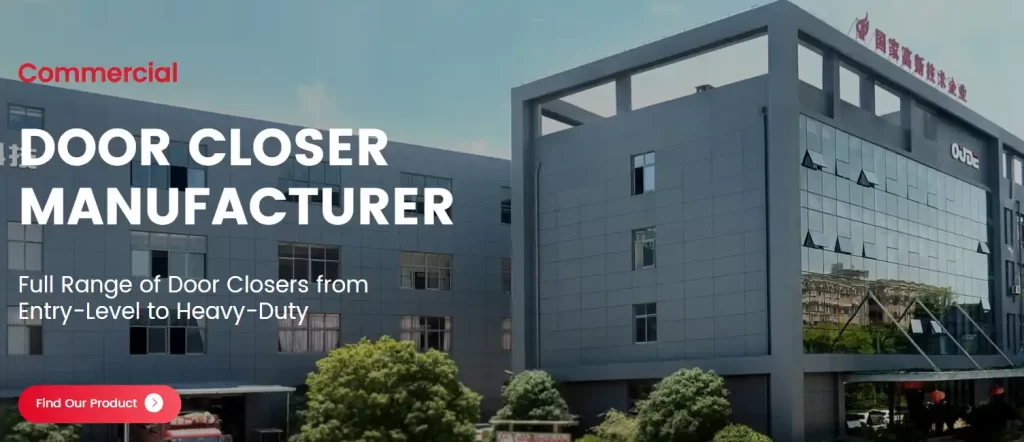
The region’s manufacturing strength also makes it a major global supplier of door closers, especially from China, where brands like OUDE deliver both mass-market and project-grade options.
Below is a comparison that highlights key differences between the two regions’ purchasing and usage patterns.
| Criteria | Europe | Asia-Pacific |
| Market Focus | Compliance, quality, and fire safety | Affordability, scalability, and fast development |
| Preferred Materials | Steel and premium aluminum | Aluminum and cost-efficient alloy bodies |
| Technology Trends | Soft-closing, high-durability, advanced hydraulics | Standard hydraulic closers, growing smart closer adoption |
| Buyer Priorities | Certification, long lifespan, and reliability | Price, availability, OEM/ODM customization |
| Growth Outlook | Stable and compliance-driven | Fast-growing, construction-driven |
Notable Trend Differences:
As global building standards evolve, door closer demand will continue shifting.
Major opportunities include:
Manufacturers capable of balancing high-quality engineering with cost-efficient production, such as leading Chinese brands, are expected to dominate future market share.
The comparison of Door closer market trends in Europe and Asia shows clear differences in buyer priorities, regulatory environments, and growth dynamics. Europe’s market is driven by safety, performance, and certification, while Asia-Pacific’s expansion is powered by construction growth and cost-efficiency.
For global distributors, understanding these regional nuances ensures better sourcing decisions and improved product alignment with target markets. Whether supplying premium EU projects or high-volume Asian developments, the right door closer selection directly impacts safety, durability, and long-term performance.
Q1: What drives door closer market growth in Europe?
A1: Strict building codes, fire safety requirements, and demand for long-lasting certified closers drive Europe’s growth.
Q2: Why is Asia-Pacific the largest door closer market?
A2: Rapid urbanization, residential expansion, and ongoing industrial development boost large-scale door closer demand.
Q3: Which materials are preferred in Europe?
A3: Steel and high-grade aluminum are widely preferred due to durability and compliance needs.
Q4: Are OEM/ODM door closers more common in Asia?
A4: Yes, Asia, especially China, offers extensive OEM/ODM manufacturing to support global distributors.
Q5: Are smart door closers growing in both regions?
A5: Yes, but Europe currently leads adoption due to advanced building automation and stricter facility requirements.








 English
  Spanish
  French
  Arabic
  German
  Portuguese