
Building codes and fire safety regulations are non-negotiable for commercial property owners and distributors. Fire door effectiveness depends on the hardware’s ability to achieve complete closure during an emergency. With this in mind, selecting the right fire safety door closers is critical to a robust fire protection system. Such devices ensure that all fire-rated accessories remain sealed and prevent toxic smoke and intense flames.
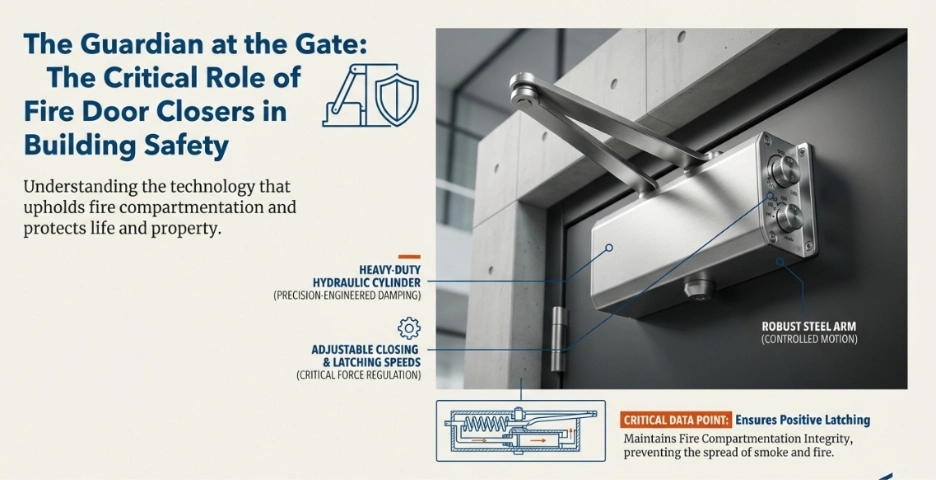
A self-closing fire door acts as a dynamic barrier. During a structural fire, pressure differences between rooms can cause doors to swing open if they are not adequately controlled. A commercial fire door closer uses a precision-engineered internal spring and hydraulic fluid to ensure the door latches every time it is opened.
Without a functional closer, a fire door is merely a piece of wood or steel. The quality of the whole fire compartment will depend on the ability of the hardware to overcome latching friction and air resistance. In high-rise environments, there must be sufficient closing force to secure the latch without compromising manual egress, as the stack effect can create significant air pressure.
The process of selecting fire-rated door closer products must include verification of compliance with international standards. The UL 10C and EN 1154 certificates must accompany the selected door closer. They will demonstrate that the door closer can withstand extreme heat for up to three hours without hydraulic fluid leaks or spring tension loss.
Vital technical aspects for high-traffic environments include the following:
A door closer should provide ease of egress, security, and fire containment. Proper installation of fire safety door closers for emergency exits ensures that, once an individual flees the building, the exit door behind them closes immediately. The ‘chimney effect’ then plays in, where oxygen rushes into the building, feeding the fire.
Distributors should note that, for emergency exits, fire door hardware must not only close the door but also do so with a force that meets local life safety codes. Insufficient closing torque may leave the door ajar; conversely, excessive opening force can impede egress for individuals with disabilities or older adults.
For high-traffic commercial environments, the durability of fire door hardware is measured in mechanical cycles. Grade 1 closers are tested for 2 million cycles to ensure they do not fail under constant daily use. For business owners, investing in high-cycle hardware reduces long-term maintenance costs and helps ensure compliance during annual fire inspections.
By providing reliable closing force under extreme conditions, these devices save lives and protect property investments.









 English
  Spanish
  French
  Arabic
  German
  Portuguese