Call Us
+86 577 86808802
Send Us Mail
oude@cn-oude.com
by admin on February 10th 2026
understanding

How Door Closer Repair and Maintenance Enhances Business Security

In a business establishment, commercial doors are the main barrier between your assets and the outside world. Most facility managers focus on electric locks. However, having reliable door security hardware is vital. 

A commercial door that fails to latch properly may lead to unauthorized access. Your commercial entry security door should have latching speed security at all times. 

This guide will help you understand how door closer repair and maintenance affects your facility’s security. 

The Latching Risk: Preventing Unauthorized Entry

The most critical phase of a door’s swing is the final “latch zone”. This is where the closer must overcome air pressure and latch friction to secure the building. If the latching speed security is set too low, the door may come to rest just millimeters from the strike plate.

This leads to a “half-latched” state. This means that the door appears shut but can be pushed open without a key. 

Tailgating becomes a major security risk due to technical door hardware failure. Intruders may follow authorized personnel into restricted zones.

Make sure to adjust the latching valve regularly. This ensures that the door engages the lock firmly and latches securely. 

Slamming Risks: How they Compromise Security

Conversely, a door that closes too fast poses a different threat to commercial entry security. Heavy slamming vibrates the entire frame and internal locking mechanisms. This mechanical shock causes misalignment of the latch bolt and strike plate. 

Heavy slamming causes the hardware to misalign. This affects even a functional closer and the door cannot be forced into a locked position. Repeated slamming can also cause structural hairline structures in the door frame. 

These weaknesses make the commercial door prone to prying or forced entry and poses a security risk. It is best to check proper hydraulic backcheck settings regularly. This helps prevent the door from hitting walls or slamming during high-traffic periods. 
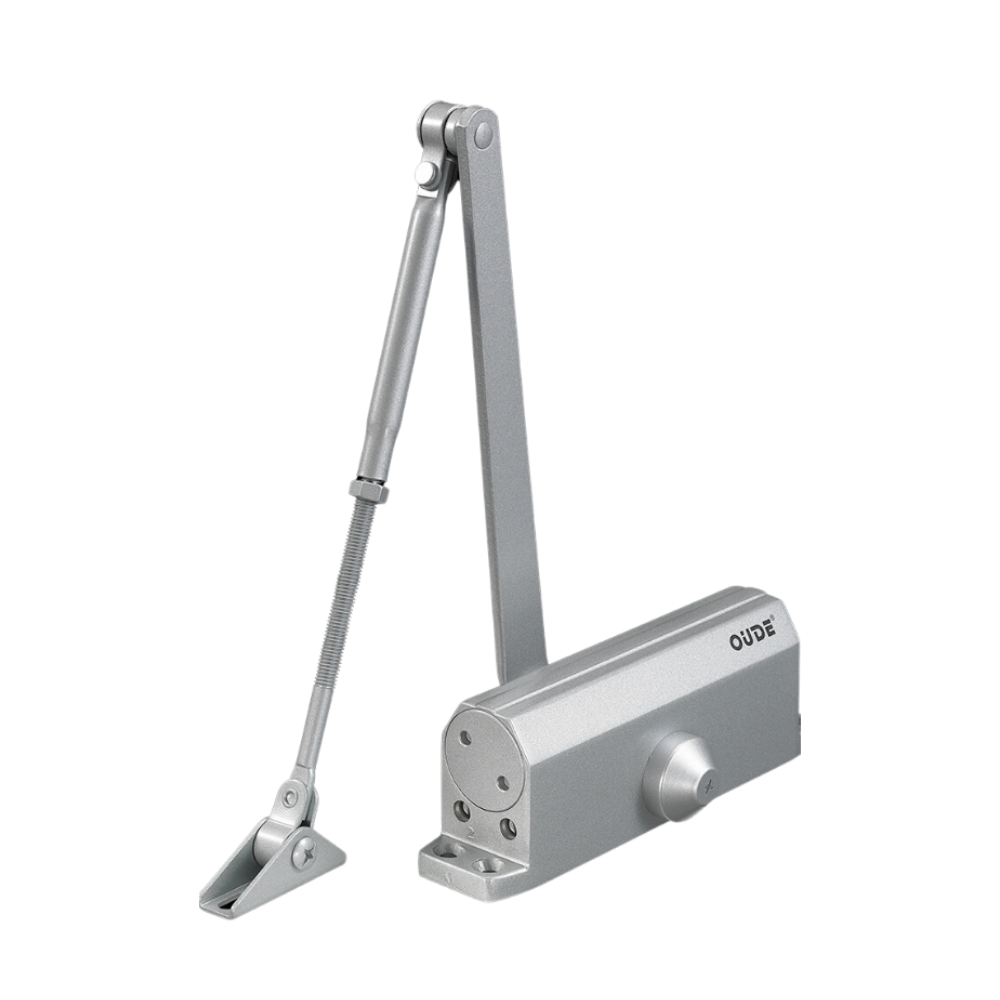
Door Closer 6033AW
Size: 186MM(L)×68MM(H)×44.5MM(W)
Footprint: 168MM×19MM
Power: En3#
Door Weight: 45KG-60KG
Door Width: ≤950MM
View Details & Inquiry
Door Closer 6033AW

Routine Inspection: Troubleshooting and Ensuring Latching Speed Security

As a facility manager or security offer, you should perform a monthly audit of all door security hardware. Here are the primary steps involved on how to determine if you need a door closer repair or replacement:

  1. Inspect and Clean –  Check the latch mechanism and the strike plate. They must be free of any dirt or debris. Otherwise, clean them using compressed air or a small brush.
  2. Lubricate the Latch – Apply a silicone-based lubricant or graphite powder to the latch bolt and its housing. This ensures smooth operation. Avoid oil-based lubricants because they are prone to collecting dirt. 
  3. Check and Tighten Hinges – Misalignment is caused by loose or sagging hinges. Tighten all hinge screws with a screwdriver. If screws are stripped or short, replace them with longer 2.5 or 3-inch screws that reach into the door frame studs. This results in better stability and support. 
  4. Adjust the Strike Plate – Make minor adjustments and align the latch with the strike plate hole. 
  5. Mark the Contact Point – Mark the latch bolt and see where it hits the strike plate. Close the door slowly and see if it needs alignment. 
  6. Hinge Alignment – If the latch bolt does not align with the strike plate, it could also be a misaligned hinge. Check also if the door is at the correct level to prevent dragging. Dragging can cause the door to get stuck midway. 
  7. Adjust Strike Plate – If the door is still misaligned, loosen the strike plate screws then reposition it. You may also need to use a chisel to slightly enlarge the mortise, which is the cutout section in the door frame. You can also use a metal file to widen the strike plate hole. 
  8. Secure – Once aligned, fill the screw holes with wood filler or wooden dowels. You can also re-drill new pilot holes using a self-centering bit before securing the plate with long screws. 
  9. Timed Swing – Check if the door closes in 5 to 7 seconds from a 90-degree angle. If not, you may need to lubricate the latch or adjust the hinges. 
  10. Latching Force – Ensure that the latch clicks into the strike place automatically. This should be done without manual assistance. 
  11. Fluid Inspection – An oily residue in the closer body indicates a failed hydraulic seal. When this happens, a replacement is required. 
  12. Fastener Tension – Check if all mounting screws on the arm and soffit plate are torqued correctly. 

Conclusion

A mechanical failure of your door security hardware poses a security threat to your business. Facility managers should conduct routine inspections and prioritize latching speed security. This helps eliminate common entry vulnerability especially in high-traffic commercial environments. Always choose door hardware that meets ANSI/BHMA Grade 1 standards to ensure commercial entry security at all times.


GET A CONTACT
SEND US A MESSAGE​
GET A CONTACT
Send Us a Message​
YOUR NAME
COUNTRY
COMPANY
YOUR EMAIL
YOUR PHONE
YOUR MESSAGE
en_USEnglish

Get A Touch Now