
Door slamming in offices does not happen by chance. Pressure differences, worn hardware and poor closing control push doors into the frame with more force than expected, which raises noise and speeds up wear on the opening. This article breaks down those causes and shows the door closer features that help stop door slamming while improving acoustic performance and long-term reliability.
Office noise does more than fill the background. It shapes how people work. A sudden door slam cuts through conversation, breaks focus and pulls attention away from tasks that require consistency.
That type of sound does not stay in one place. Hard surfaces reflect it. Open layouts spread it. One impact near a hallway can carry across workstations, meeting rooms and shared areas.
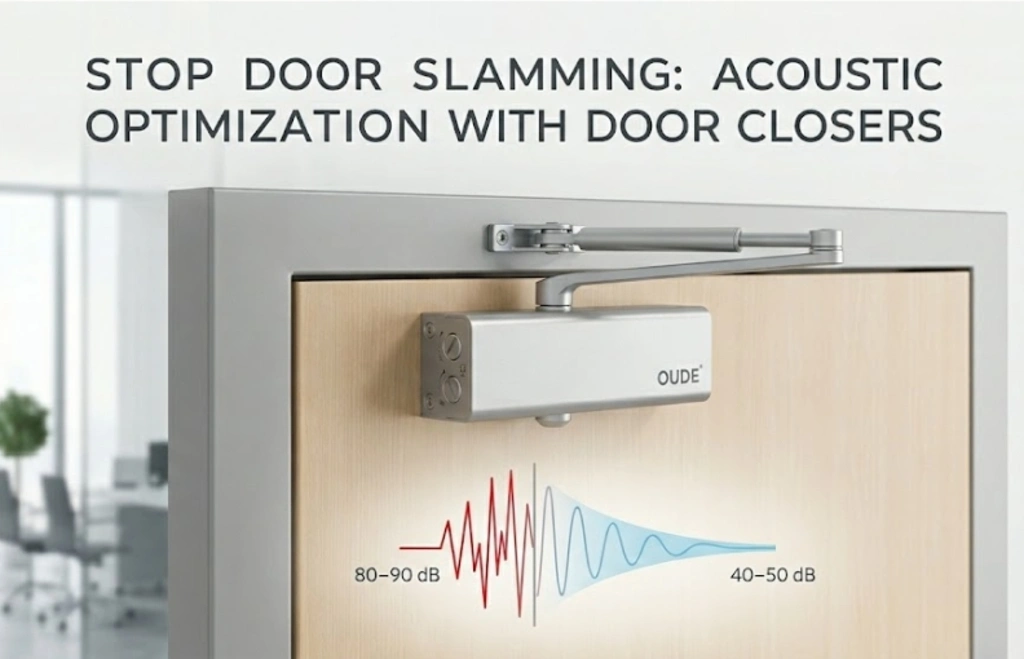
The difference becomes clearer when you compare sound levels:
| Noise condition | Typical level | Effect in the office |
| Quiet workspace | 40–50 dB | Supports focus |
| Normal conversation | ~60 dB | Mild distraction |
| Door slamming | 80–90 dB | Sharp interruption |
A quiet door closer for office use reduces that spike at the source. It removes the guesswork from daily use and keeps sound levels consistent without asking people to change behavior.
Doors slam when force builds faster than control. In most buildings, that force comes from air movement and stored energy in the closer. When control drops, impact rises.
Modern offices rely on sealed environments and mechanical airflow. That setup creates pressure differences between rooms, corridors and entry points.
When someone opens a door, air shifts to balance that pressure. When the door closes, the same pressure can push it forward. The door picks up speed without warning, especially in:
That extra push may feel minor at first. Over time, it becomes the reason doors close harder than expected.
Door closers rely on hydraulic resistance to slow movement. Inside the unit, fluid and seals work together to absorb energy and regulate speed.
As those components wear down:
The closer still moves the door, but it no longer manages the force. That shift turns a controlled close into a slam.
To stop door slamming, it requires control at every stage of movement, not just at the start. The closer must manage speed, force and transition into the frame.
A soft close door closer divides closing into two stages:
This separation matters more than it seems. A door can move smoothly through most of its swing and still hit hard at the end if the latch phase runs too fast.
With dual adjustment, you can:
That level of control keeps the closing motion predictable throughout the day.
Hydraulic dampening absorbs energy as the door nears the frame. Instead of stopping abruptly, the door transitions into contact.
This change affects both sound and feel:
Well-designed acoustic door hardware maintains this performance over time. It does not rely on constant adjustment to stay effective.
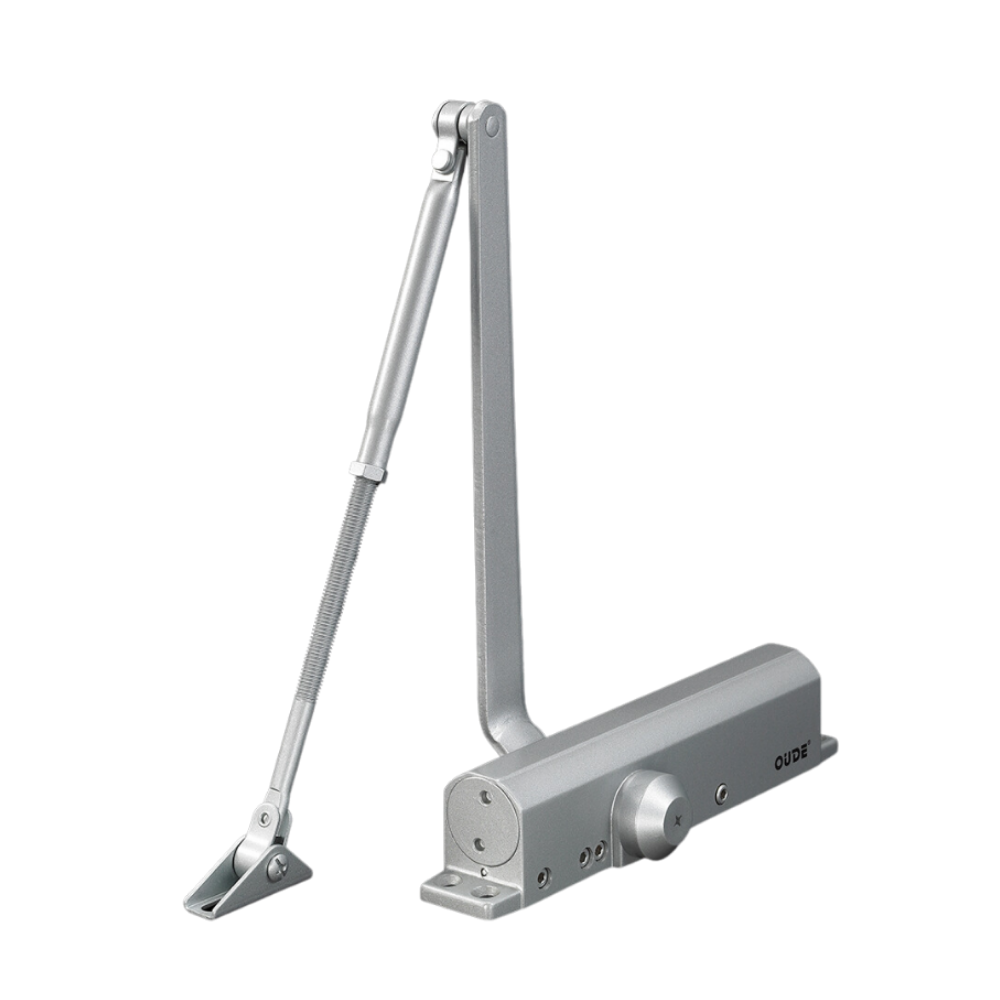
The issue extends past noise. Each slam sends force into the door system. Over time, that force adds up.
You may start to notice:
A commercial door silencer functions within a controlled closer that reduces the impact. It manages motion before contact instead of dealing with damage after it happens.
The difference between setups becomes easier to understand when compared side by side:
| Hardware setup | Closing control | Final contact control | Impact on structure |
| Standard hinge | None | None | High stress |
| Basic closer | Partial | Limited | Moderate stress |
| Adjustable hydraulic closer | Consistent | Tunable | Reduced stress |
When closing stays controlled, the entire system lasts longer. That includes the door, the frame and the hardware around it.
Door slamming usually points to a control issue, not a random event. Pressure differences add force, worn components reduce resistance and poor adjustment allows the final impact to happen too fast.
A well-designed hydraulic closer addresses those factors by managing speed and absorbing energy throughout the closing cycle. The system controls the door as it moves, so impact does not build at the end.
OUDE hydraulic door closers support that approach by delivering controlled, stable closing in environments where sound and consistency matter. When control becomes part of the design, a quieter and more durable space follows naturally.









 English
  Spanish
  French
  Arabic
  German
  Portuguese