
In high-traffic commercial establishments, a door closer serves as the “engine” of your door. Its main purpose is to make sure that your door closes safely and securely. You also need to ensure that your door closer can withstand the frequency of door opening and closing without sacrificing safety.
Choosing between Grade 1 vs Grade 2 door closer grades is a choice between durability and safety. This article examines the door closer ANSI/BHMA A 156.4 standards to help you choose between the Grade 1 and Grade 2 doors for your establishment.
Selecting between Grade 1 and Grade 2 door closers depends on several key factors. These include the total number of opening and closing cycles and its resistance to environmental conditions.
A Grade 1 certified door closer represents the highest tier of durability in the industry. To earn this rating under door closer ANSI/BHMA a156.4 standards, it must complete at least 2,000,000 cycles without failure.
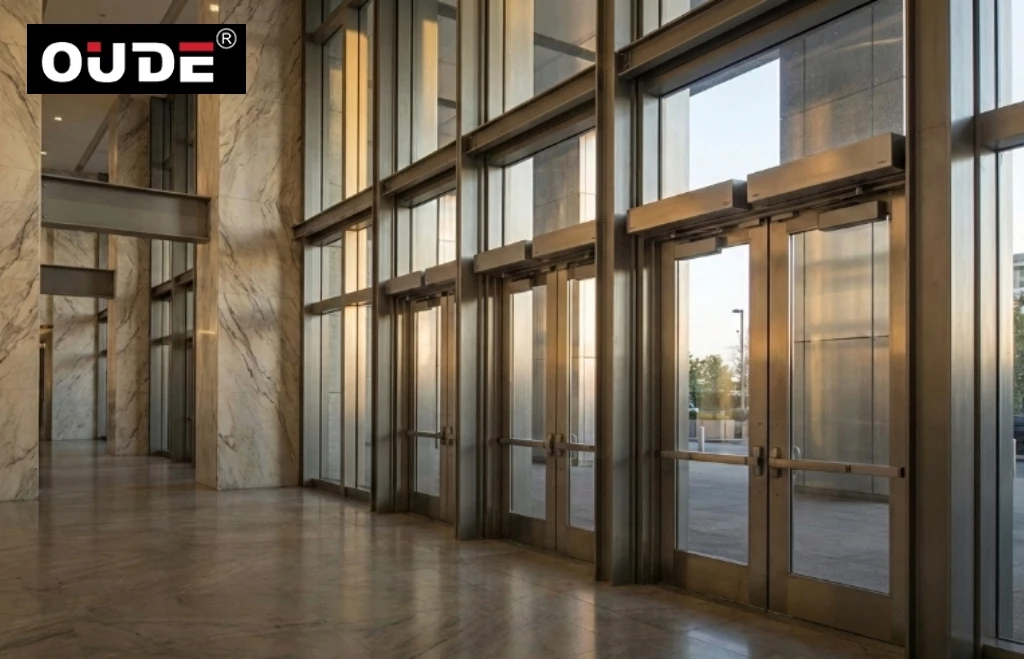
Grade 1 certified door closers are recommended for busy areas since they are designed to complete at least 2 million cycles. They are typically made of cast iron or forged steel. This door closer grade is strong enough to handle a heavy exterior door. This applies even when the door is caught by a gust of wind without the internal gears snapping.
Grade 1 closers are essential for high-traffic environments such as:
Grade 1 units reduce long-term maintenance costs by providing 2x the service life of Grade 2 units in 1,000+ daily cycle environments. By choosing Grade 1, engineers ensure the hardware can handle high-velocity air currents and frequent manual abuse.
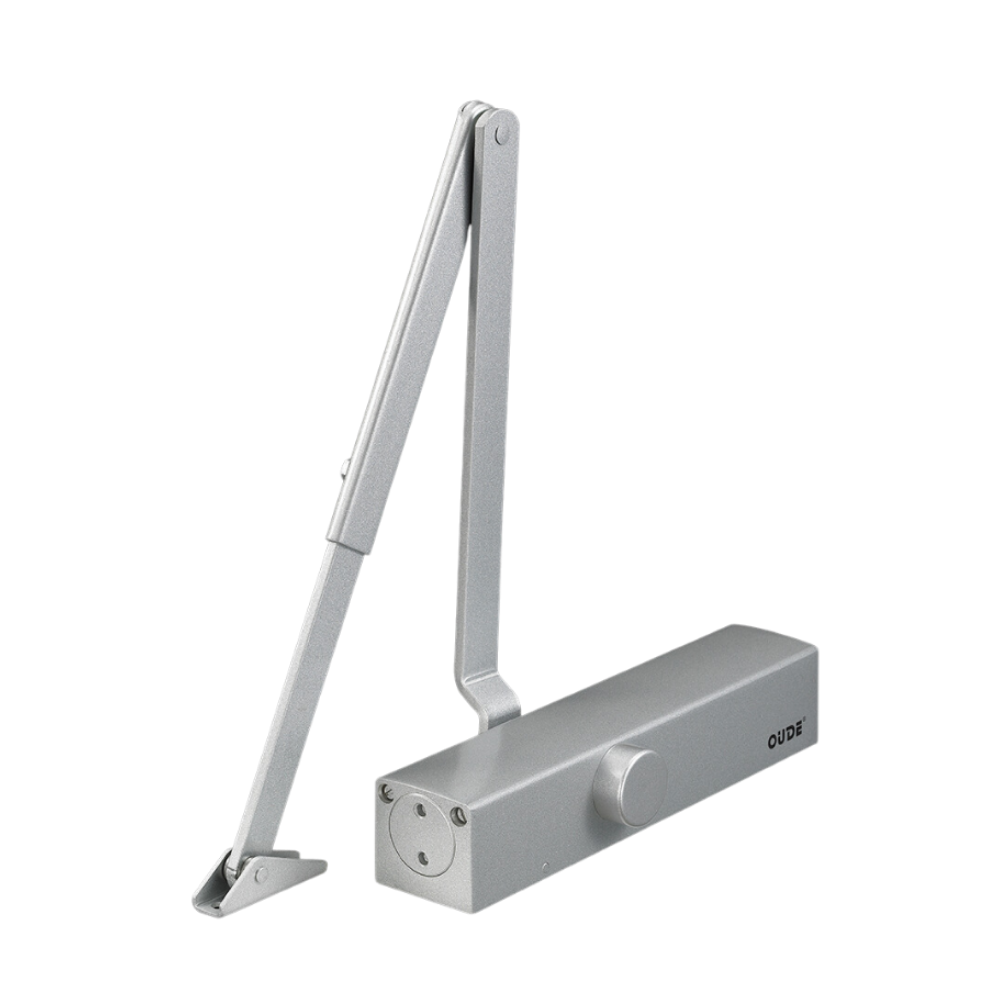
Grade 2 door closers are reliable but only in low frequency use. They are typically made of lighter aluminum.
Under the door closer ANSI/BHMA a156.4 testing protocol, Grade 2 units must pass the 1 million-cycle stress test. Since they are designed for light commercial use, the aluminum housings provide a more compact and cost-effective footprint.
Grade 2 closers are suitable for:
These grade 2 door closers can safely close doors with the right amount of force. They are cost-effective and cheaper than industrial-strength hardware.
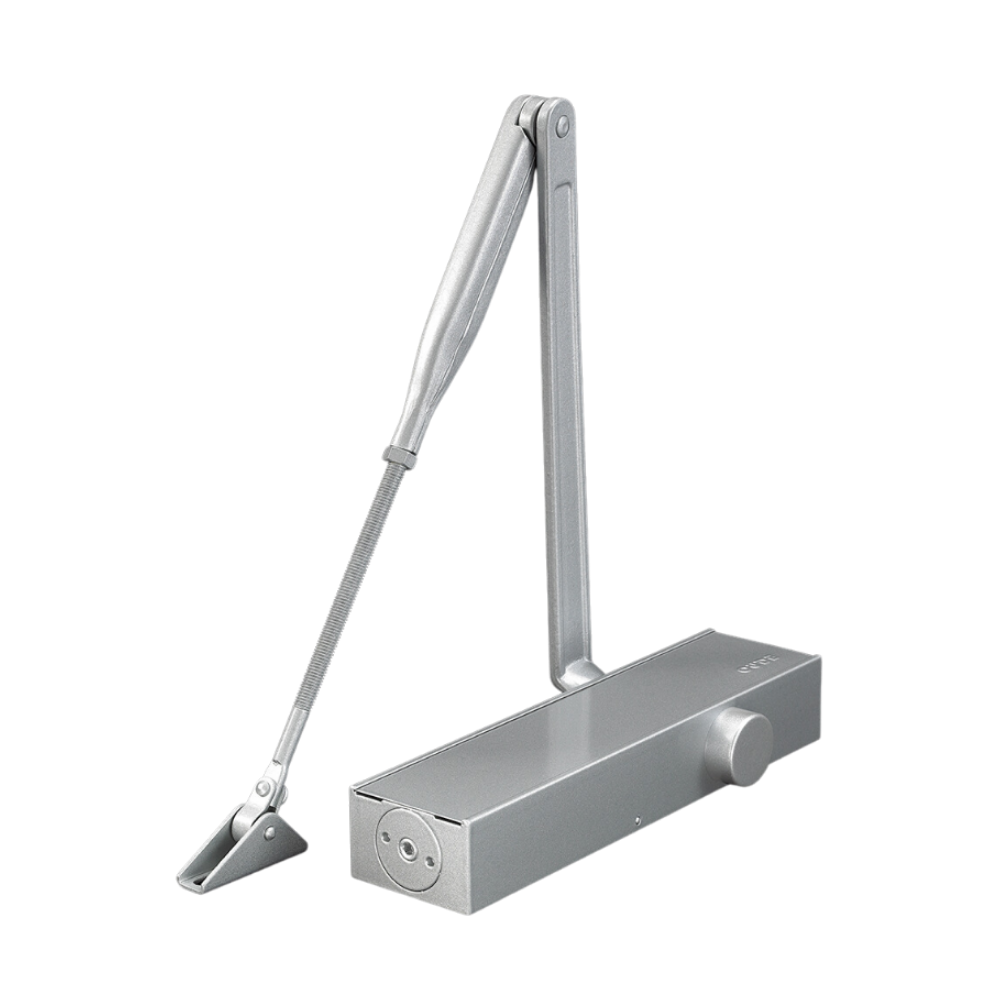
Selecting the correct commercial door closer requires a direct comparison of technical specifications and long-term ROI.
| Feature | Grade 1 Door Closers | Grade 2 Door Closers |
| Cycle Life (Minimum) | 2,000,000+ Cycles | 1,000,000 Cycles |
| Material Build | Cast Iron or Forged Steel | Aluminum Alloy |
| Price Point | Premium (High ROI) | Mid-range (Lower CAPEX) |
| Traffic Level | 1,000+ operations/day | Under 500 operations/day |
| Primary Use Case | Exterior Doors / Hospitals | Interior Offices / Small Retail |
To select the right hardware, start with a traffic audit. Multiply the number of daily users by four to estimate the daily cycles for a main entrance. If the result exceeds 500 cycles per day, a Grade 1 heavy duty commercial door closer is the only viable engineering choice to prevent hydraulic fluid breakdown.
Environmental factors also dictate selection. Exterior doors subject to wind loads or buildings with high “stack pressure” (internal air pressure) require the adjustable power of a Grade 1 unit. For interior partitions where fire code compliance is the priority rather than cycle count, a Grade 2 closer offers a professional and compliant solution.
Choosing the wrong grade also leads to two problems which may affect your business:
Understanding Grade 1 vs Grade 2 door closer grades is vital for maintaining building safety and reducing lifecycle costs.
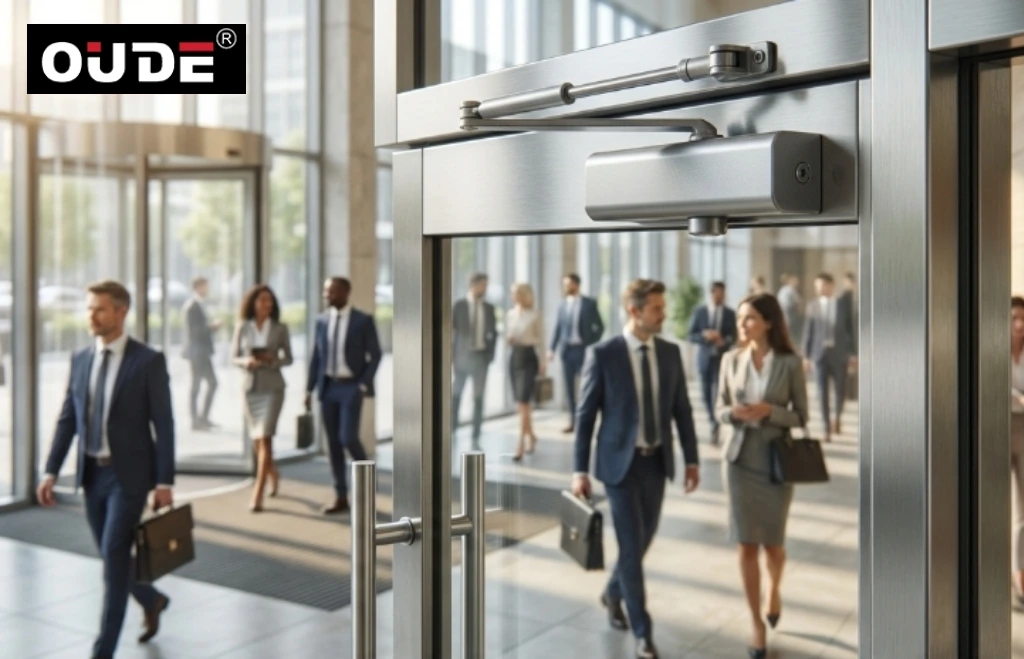
Grade 1 closers provide 2,000,000 cycles for high-traffic zones. High-traffic establishments include schools, hospitals, and office building entrance / exit doors.
Grade 2 units offer a reliable 1,000,000-cycle solution for lighter commercial use. These are recommended for doors that are rarely opened such as storage room doors, restroom doors, and conference room doors.
Selecting the correct door closer grade helps prevent mechanical failures like oil leaks. This ensures your emergency doors remain fully operational and prevents potential security or safety violations.
By matching your hardware to the door closer ANSI/BHMA a156.4 standards, you ensure long-term operational stability and code compliance.









 English
  Spanish
  French
  Arabic
  German
  Portuguese