
A door closer is often viewed as a simple mechanical device at the top of the door. Its main function is to ensure that it shuts automatically after someone walks through.
However, facility managers and procurement officers must look beyond its purpose. Selecting the wrong specification can lead to significant operational friction, increased HVAC energy expenditure, and severe fire code violations.
The choice between a door closer Hold-Open (HO) and a Non-Hold-Open (NHO) model comes down to how a room is used. You also need to consider what the local fire codes require.
In this article, we will explore the differences between the two commercial door closer models. We will also discuss their mechanical functions, logistics benefits, and the legal mandates regarding fire door safety.
At the end of the article, you will discover how to ensure that your hardware investment meets both efficiency and safety standards.
The primary technical distinction lies in the arm assembly and internal valving. A standard commercial door closer is Non-Hold-Open (NHO). This means that the internal spring and hydraulic fluid ensure the door returns to a latched position automatically.
No matter how far you open a Non-Hold Open door closer, the moment you let go, the door will close by itself.
On the other hand, a hold-open (HO) model has a built-in “catch” or a friction arm. When you push the door past a certain angle, usually around 90 degrees, it clicks into place and stays open. You have to manually give it a firm tug to release the catch and shut the door.
Door hardware manufacturers, such as Oude, often utilize cam-action fire rated door closer designs or adjustable friction levels. This helps provide smoother engagement for high-traffic industrial environments.
| Feature | Hold-Open (HO) | Non-Hold-Open (NHO) |
| Best For | Stockrooms, Staff Lounges, Loading Areas | Fire Doors, Main Entrances, Exterior Doors |
| User Experience | Convenient for carrying loads | Consistent security and climate control |
| Compliance | Often restricted on fire-rated exits | Standard for fire safety codes |
| Maintenance | Higher wear on the “catch” mechanism | Very low maintenance; simple operation |
In logistics and staff-heavy environments, a hold-open door closer acts as a productivity tool.
Asset Longevity: By providing a built-in hold function, businesses prevent staff from using unauthorized door stops like fire extinguishers or heavy boxes. These makeshift solutions often damage the closer’s internal seals and door hinges over time.
The most critical factor in B2B procurement is the fire rated door closer mandate. Mechanical hold-open arms are strictly prohibited on fire doors.
In the event of a fire, a door must be fully closed and latched to create a pressurized barrier against smoke. It also helps stop the fire by removing the oxygen supply. A door mechanically held open by a friction arm renders the fire assembly useless.
Installing a manual hold-open type on a fire-rated exit can result in failed building inspections and significant legal liability in the event of an emergency.
For buyers requiring both convenience and safety, electromagnetic hold-opens are the only compliant solution, as they automatically release the door when the fire alarm is triggered.
Standard fire door safety relies on NHO closers to maintain the building’s integrity.
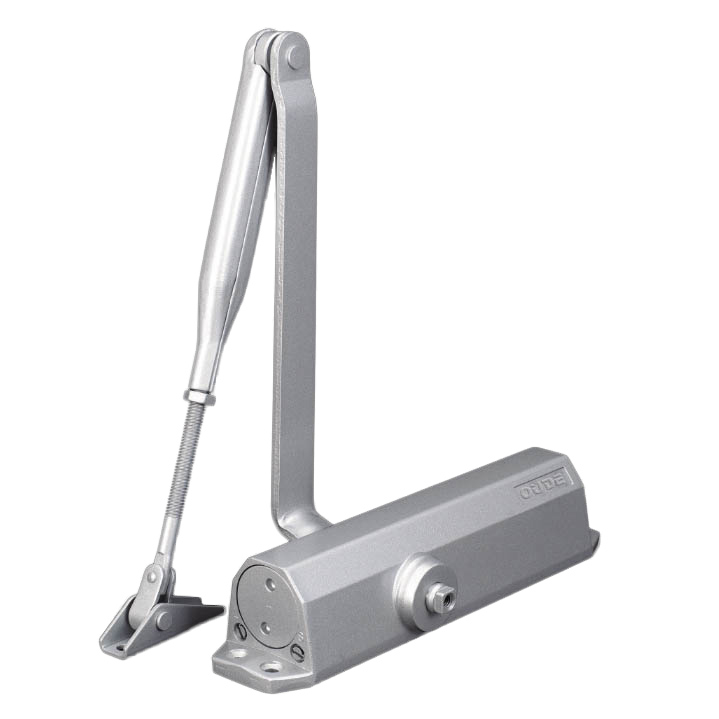
Choosing between these two systems depends entirely on the door’s function and local fire regulations. Fire rated door closer units must be Non-Hold-Open to comply with international safety standards and protect life during an emergency.
For internal, non-fire-rated areas like supply closets or loading zones, a door closer hold-open model is the superior choice for operational efficiency. Always verify the fire rating of your door frame before purchasing to ensure your facility remains compliant and secure.Aode, a manufacturer of door hardware, manufactures door closers that comply with CE marking and European safety standards. Certifire certification ensures that it has passed strict fire resistance tests.





 English
  Spanish
  French
  Arabic
  German
  Portuguese