
Architects, contractors, and hardware distributors often compare floor spring vs door closer systems when selecting door-control solutions for commercial spaces. Both mechanisms ensure smooth and controlled door operation, but they serve different purposes, offer different strengths, and suit different types of doors.
In this guide, we break down their definitions, load-bearing abilities, installation requirements, and the ideal scenarios for each, written in the same clear and technical tone as OUDE’s blog content.
Before choosing between a floor spring and a door closer, it’s essential to understand how each mechanism works, how they control door movement, and what type of door each is engineered for. Every project has different structural and functional requirements, so knowing the basics helps architects, contractors, and builders identify the most suitable hardware for long-term performance, safety, and aesthetics.
A floor spring is a heavy-duty mechanical door-control device installed in the floor and designed for pivot-type doors.
Floor spring definition: It is a concealed closing mechanism that uses a hydraulic system and a strong spindle to control door opening and closing from beneath the door.
Because the hardware is embedded in the floor, it provides superior stability and higher load-bearing capacity than most surface-mounted closers.
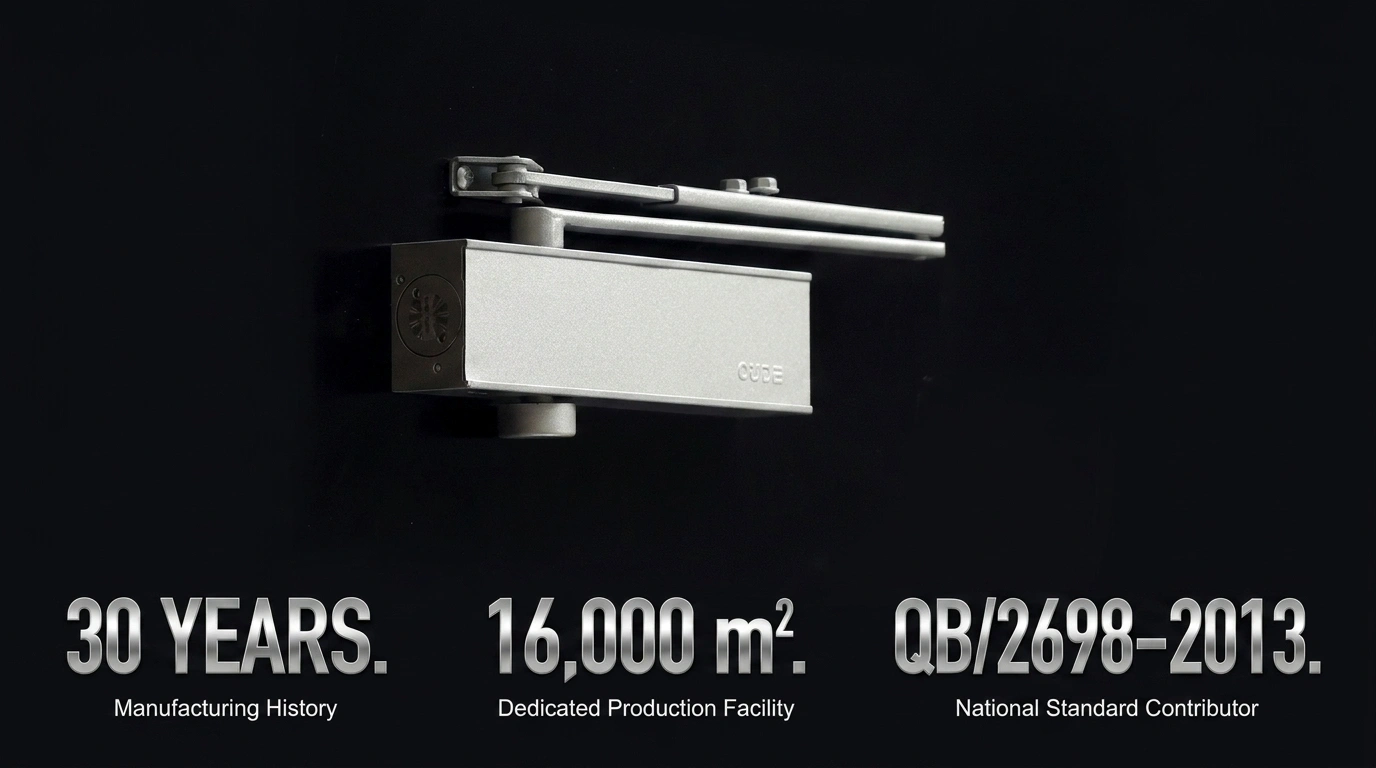
A door closer is a mechanical device installed at the top of the door to ensure controlled closing and improved safety. It operates through a hydraulic arm that slows the door’s movement to prevent slamming.

Door closers are versatile, making them a standard choice for interior and exterior swinging doors.
Below is a clear and straightforward comparison of the most important attributes, helping you quickly identify how floor springs and door closers differ in performance, installation requirements, and ideal application scenarios.
If aesthetics and a clean, minimal look matter especially with glass doors, floor springs offer a significant advantage.
Door closer vs floor spring load-bearing:
For oversized, heavy glass doors, a floor spring is the recommended option.
When to choose a floor spring:
When to choose a door closer:
Your decision should be based on:
For glass entrances or heavy pivot doors, floor springs offer unmatched support.
For standard commercial doors, door closers deliver reliable performance at a lower cost.
Choosing the right hardware between a floor spring vs door closer depends on your project’s door type, load requirements, and design preferences. Floor springs are the premium choice for heavy and frameless doors, while door closers offer flexibility, safety compliance, and cost-efficiency for most commercial and industrial applications.
For architects, contractors, and distributors looking for long-lasting and performance-driven door hardware, selecting the right mechanism ensures durability, safety, and smooth daily operation.
For reliable and high-quality door closers, explore OUDE’s range of commercial-grade solutions and get the right hardware for your project.
Q1: Is a floor spring better than a door closer?
A1: It depends on the application. Floor springs are best for heavy or glass doors, while door closers fit standard commercial and fire-rated doors.
Q2: Can a floor spring be used on wooden doors?
A2: Yes. While commonly used on glass doors, floor springs can also support wooden pivot doors as long as the door design accommodates the spindle.
Q3: Which one is easier to install?
A3: Door closers are easier and faster to install because they are surface-mounted. Floor springs require cutting the floor and precise alignment.
Q4: Do door closers support two-way opening?
A4: No. Door closers typically only allow one-way opening. Floor springs are designed for two-way (double-action) movement.
Q5: How long do floor springs and door closers last?
A5: With proper installation and maintenance, both can last several years. Floor springs, being concealed, often have longer durability for high-traffic environments.





 English
  Spanish
  French
  Arabic
  German
  Portuguese